skip to main content

All Posts, page 8

  1. AI Is Coming for Your Favorite Menial Tasks
    theatlantic.com

    Fred Benenson:

    When people talk about the effects of automation and artificial intelligence on the economy, they often fixate on the quantity of human workers. Will robots take our jobs? Others focus instead on threats to the quality of employment—the replacement of middle-class occupations with lower-skill, lower-wage ones; the steady elimination of human discretion as algorithms order around warehouse pickers, ride-hailing drivers, and other workers.

    What’s less understood is that artificial intelligence will transform higher-skill positions, too—in ways that demand more human judgment rather than less. And that could be a problem. As AI gets better at performing the routine tasks traditionally done by humans, only the hardest ones will be left for us to do. But wrestling with only difficult decisions all day long is stressful and unpleasant. Being able to make at least some easy calls, such as allowing Santorini onto Kickstarter, can be deeply satisfying.

    “Decision making is very cognitively draining,” the author and former clinical psychologist Alice Boyes told me via email, “so it’s nice to have some tasks that provide a sense of accomplishment but just require getting it done and repeating what you know, rather than everything needing very taxing novel decision making.”

  2. Better Than Human: Why Robots Will — And Must — Take Our Jobs
    wired.com

    Kevin Kelly:

    In the coming years our relationships with robots will become ever more complex. But already a recurring pattern is emerging. No matter what your current job or your salary, you will progress through these Seven Stages of Robot Replacement, again and again:

    1. A robot/computer cannot possibly do the tasks I do.
    2. OK, it can do a lot of them, but it can’t do everything I do.
    3. OK, it can do everything I do, except it needs me when it breaks down, which is often.
    4. OK, it operates flawlessly on routine stuff, but I need to train it for new tasks.
    5. OK, it can have my old boring job, because it’s obvious that was not a job that humans were meant to do.
    6. Wow, now that robots are doing my old job, my new job is much more fun and pays more!
    7. I am so glad a robot/computer cannot possibly do what I do now.
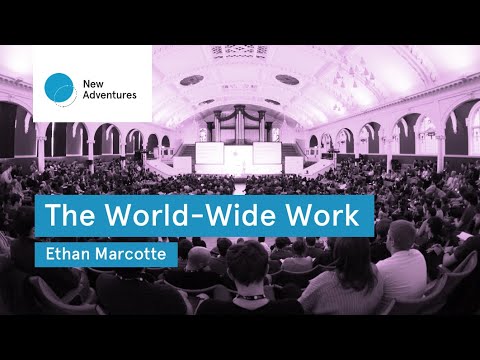
  3. The World-Wide Work
    ethanmarcotte.com

    Finally watched Ethan Marcotte’s talk from this year’s New Adventures conference. It’s as good as everyone said.

    The sewing machine was introduced to the public in the middle of the 19th century. When it was made commercially available, it was advertised as an appliance that would free women from the routine drudgery of hand-sewing.

    A few short decades later, this pamphlet said that a female operator could use a Singer sewing machine to produce 3,300 stitches per minute.

    That shift in tone is really intriguing to me: as the technology improved, the messaging around sewing machines shifted from personal liberty to technical efficiency.

    People are promised that technology will free them; ultimately, as the technology matures, it captures them.

    I’d like to propose that what happened with the sewing machine is currently happening with the Web: that the Web is becoming industrialized in the same way that the sewing machine was.

  4. Catalina Vista
    mjtsai.com

    The macOS Catalina situation seems to be pretty bad. My biggest reasons for upgrading are Apple Arcade and Reminders, but in return I’d have to:

    • give up Photoshop CS6
    • give up a bunch of games on my Steam library
    • deal with my old Aperture libraries as the app is finally broken
    • learn a new shell, or replace it
    • fix all the tooling stuff that will break due to the new read-only system volume
    • put up with all the permission annoyances
    • deal with all the damn bugs

    Marco Arment’s take on ATP is right: “not enough carrot to take the stick”. For the first time ever I might actually skip a major version of macOS.

  5. A Game of Thrones by George R. R. Martin

    1996 book

    Read 23 May – 17 October 2019

    I’ve watched the first season of the show more than once, so there were no surprises to be found in this book, only details. That made it a slog to get through, even as it matched my expectations exactly.

    The book is fine, but most of its strength lies in finding out what happens — not so much in the flair of its style, or the inventiveness of its ideas, and certainly not in the very systematic, episodic structure that often threw me off pace.

    On the one hand, it did give me what I craved: more detail and cohesiveness than the show could bear to sustain. On the other hand, there is a certain ’80s fantasy corniness in some of those details that the show did well to correct in its art direction. Why does everyone wear impractically ornate animal-shaped helms? Sure, make armor fashion a thing, but those appendaged helms just seem like they’d be a hindrance in battle, existing more as flavor text than as a realistic part of the world. They remind me of the “no capes” gag in The Incredibles.

    Nonetheless, I am into it, and I plan to keep reading the books. As the story drifts from the show’s, I can only hope that the experience of reading it will feel less like a chore.

  6. Super Earth Defense Force

    1992 video game

    Played 16 October 2019 on Nintendo Switch

    This is the worst-sounding video game I’ve ever played; the sound effects are frankly ridiculous. The visual design is also quite poor and hard to parse, with enemies, bullets, and background all blending together. And the later levels are extremely punishing. No checkpoints? Okay… But is that testicle/bird final boss even supposed to be beatable by a human? I’ve never used rewind so much in any other classic title. Nintendo, bring us good SNES shoot ‘em ups, please.

  7. Are China’s Tantrums Signs of Strength or Weakness?
    theatlantic.com

    Zeynep Tufekci wonders about China’s motivations around the Hong Kong situation:

    So why is China demanding significant censorship from Western companies—as in the case of this app—in the absence of a real threat? One thing to note is that while the original events being censored are minor to the point of trivial, the backlash creates a huge amount of publicity. You might be tempted to think that China has a Streisand-effect problem, in which trying to censor an event creates even more publicity. But that assumes the Chinese government doesn’t understand the Streisand effect, and that can’t be right, because if one government understands attention dynamics online, it’s China’s.

    Significant amounts of scholarship show that the Chinese government has been very good at burying important news by distracting from it with other, flashy but unrelated news. This shows a subtle and powerful understanding of the Streisand effect: Instead of censoring, China diverts attention.

  8. Midsommar

    2019 film

    Watched 14 October 2019

    William Jackson Harper’s character is my closest audience surrogate in this film: instead of wanting to escape from this horrific, beautiful place, he wants to learn more about it. That’s what worked so well for me in Hereditary, and it worked brilliantly once again in Midsommar. I really love this vibe of deep detail and interestingness that Ari Aster is bringing to horror.

    This was the theatrical version but I’ll definitely be watching the director’s cut as soon as I can.

    PS: I have that same mortar and pestle! (From the dance scene.) It’s from Ikea, which is hilarious

  9. Mini Motorways

    2019 video game

    Played 11–12 October 2019 on Apple Arcade

    Cool premise, but lacks depth. I hate playing armchair designer, but I think this game needed a few obvious extra features:

    • More achievements for each city. Why make lists called “Achievements” if they’re all limited to one item? I was expecting more stuff to unlock as I played.
    • A gallery of what your cities looked like at their peak, and a way to share that. When you lose, the camera zooms in, so you can’t even take a screenshot of your glorious metropolis.
    • A free build mode. Let me just play around without risk of failure, and let me place buildings myself. The more I played, the more I wanted to just put in a cheat code and build without restrictions, SimCity style.
  10. El Camino: A Breaking Bad Movie

    2019 TV show

    Watched 11 October 2019

    I didn’t know how much I wanted this, just as much as I wasn’t expecting to cry in the end. Yet here we are.

    It doesn’t escape the TV-to-film curse of feeling incomplete and slightly outside its comfort zone and somehow wrong. But taken as the missing Breaking Bad episode that time forgot, it’s absolutely flawless.

    Yet I don’t think it would have worked had the show just included this back then as its final final episode. We needed the wait, and it was worth it.

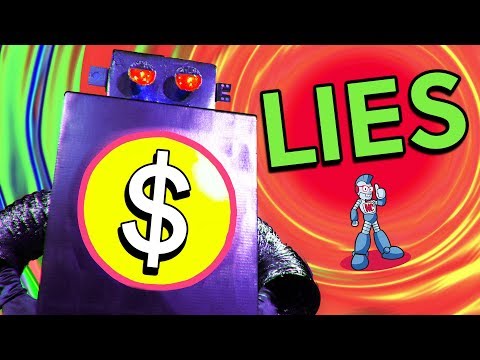
  11. Youtube’s Biggest Lie
    youtube.com

    Nerd City:

    We tested fifteen thousand common words and phrases against YouTube’s bots, one by one, and determined which of those words will cause a video to be demonetized when used in the title.

    If we took a demonetized video and changed the words “gay” or “lesbian” to “happy” or “friend”, every single time, the status of the video changed to advertiser-friendly.

    YouTube’s apparently unassailable dominance over web video is a real shame. I dream of a world where web video is like podcasts: a decentralized system where anyone can participate without ceding control to a giant corporation with black box policies.

    Monetization is already going the way of podcasts: crowd-funding and ad reads. Big video creators just can’t afford to trust that YouTube’s ever-changing policies will be on their side. The next step is decentralizing distribution, which seems like a harder problem to solve. But we’ve done it before: let’s bring back video podcasts. Let me get my video subscriptions in my RSS reader. Let’s take video away from YouTube and give it back to the web.

  12. The China Cultural Clash
    stratechery.com

    Ben Thompson:

    I am increasingly convinced this is the point every company dealing with China will reach: what matters more, money or values?

    John Gruber summarizes Ben’s points really well:

    The gist of it is that 25 years ago, when the West opened trade relations with China, we expected our foundational values like freedom of speech, personal liberty, and democracy to spread to China.

    Instead, the opposite is happening. China maintains strict control over what its people see on the Internet — the Great Firewall works. They ban our social networks where free speech reigns, but we accept and use their social networks, like TikTok, where content contrary to the Chinese Community Party line is suppressed.

    Worse, multinational mega corporations like Apple and Disney are put in a bind — they must choose between speaking up for values such as the right to privacy and freedom of speech, or making money in the Chinese market.

    And Nilay Patel makes a great comparison:

    It’s not hard to understand that carmakers in the US market build to California emissions standards because they are the strictest - it’s the most efficient choice.

    Not a leap to think global companies will hold themselves to China’s speech restrictions for the same reason.